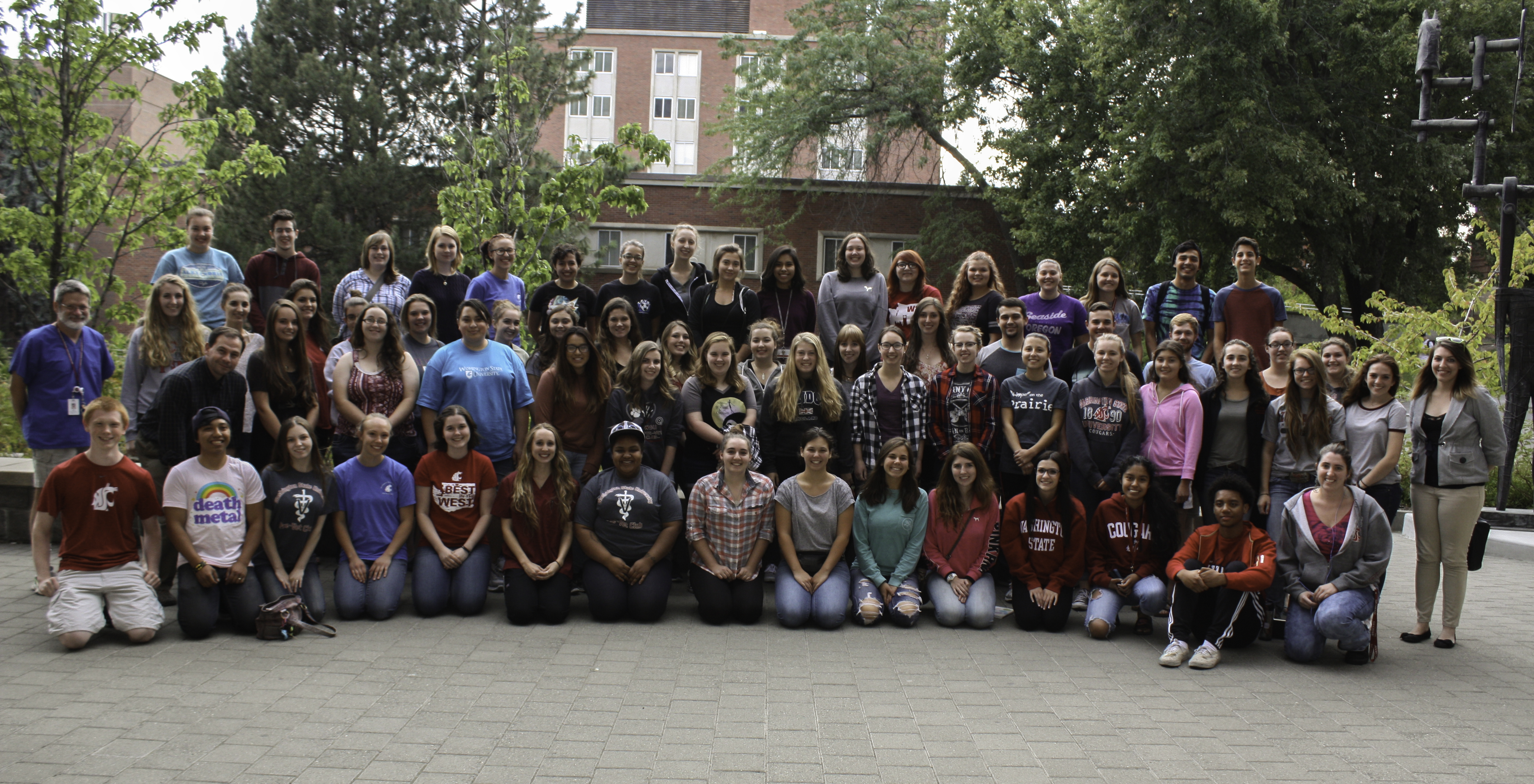
Pre-Veterinary
Pre-Veterinary Medicine
The preparatory program at Washington State University is one of the most comprehensive in the nation and offers many opportunities for students. Your health professions specialist can help you explore opportunities for research, leadership, and industry experience. Your pre-vet specialist will assist you in preparation for your professional exams and help you produce and submit a complete application to the veterinary programs of your choice.
We encourage students to meet with us at least once each semester beginning your very first semester at WSU Pullman. We advise and support students from all majors and continue to provide support to students after they complete their degree at Washington State University.
Pre-Veterinary study is not a major in itself. It is a preparatory track that can be incorporated into any major. As an undergraduate student, you may choose any major that you are passionate about and still fulfill the prerequisites necessary to qualify for a Doctor of Veterinary Medicine program after you graduate, including WSU’s own program in the College of Veterinary Medicine.
Highly motivated and uniquely qualified individuals may gain early acceptance (pre-admission) and early entry (admission) into WSU’s professional veterinary medical program through several different pathways.
Veterinary schools have different requirements. Please keep in mind that the requirements listed on our advising sheet are a general road-map for student success, and not a prescribed plan for a specific program. Students are encouraged to check individual school websites for specific requirements.
Academic Records
Admissions committees will consider your cumulative GPA, science GPA, GPA for last 45 credits (showing your success in upper-level science courses), prerequisite GPA, as well as course load per semester. The average cumulative GPA is a 3.7. Many vet schools have a minimum GPA required to apply.
Veterinary schools are looking for well-rounded students. They’re looking for future leaders. You can make yourself a better candidate by doing well in your courses as well as gaining experience and leadership skills.
Standardized Testing
Only one veterinary school still requires the GRE Revised General Test.
GRE scores must be submitted to the veterinary colleges of their choice or through the application service (depending on school).
Some veterinary schools may require the Casper Exam.
Letters of Recommendation
Students are required to submit at least three letters of recommendation, but may submit up to six. The criteria for these letters change depending on the school, but generally at least one of the letters submitted must be from a veterinarian.
Shadowing and Animal Experience
Most veterinary schools do not provide a minimum, but many recommend approximately 250-600 hours of animal experience (any work with animals not supervised by a veterinarian) and 500-1000 hours of shadowing/veterinary experience (work supervised by or in observation of a veterinarian). Note that obtaining high quality, diverse (small & large animal) shadowing experience is more important than merely accumulating hours.
Volunteer and Community Service
A strong history of volunteer activity is an indication of the applicant’s desire to contribute to society; a major component of becoming a veterinarian. A good place to start looking for community service opportunities is at the Health Professions Student Center. Your Pre-Vet Specialist can point you to opportunities in the Pullman area.
Visit the WSU College of Veterinary Medicine for information about preparing for vet school, the application process, and resources available to WSU vet students.
- Vet School Directory
Once registered, you can access their directory, pre-req chart, cost comparison tool and general information table to compare the vet schools you wish to apply to. - Accredited Vet School List
Member Institutions section list schools that offer US accreditation. Keep in mind that some schools outside of the US/UK may not be taught in English. - VMCAS Application Guide
2025 VMCAS Application Guide.
External Resources
- AAVMC home page: An organization dedicated to preparing the veterinary workforce for serving society with excellence.
- Veterinary Medical School Admissions Requirements: An up-to-date list of veterinary programs and their requirements.
United States Department of Agriculture (USDA)
- Veterinary Medicine Loan Repayment Program (VMLRP): Program that pays towards qualified educational loans of eligible veterinarians who agree to serve in NIFA designated veterinarian shortage situations for a period of three years.
Resources for Obtaining Scholarships
- Veterinary Student Scholarships: A helpful list of national organizations, colleges, and states that sponsor valuable scholarships designed to help veterinary students pay for their college education.
USDL Bureau of Labor Statistics
- Occupational outlook handbook: Information on the job description, entry level requirements, and median salary for the primary healthcare professions.
- Occupational outlook for veterinarians: Detailed information about a professional career in veterinary medicine.
Pre-Veterinary Specialist
Pre-Vet Club
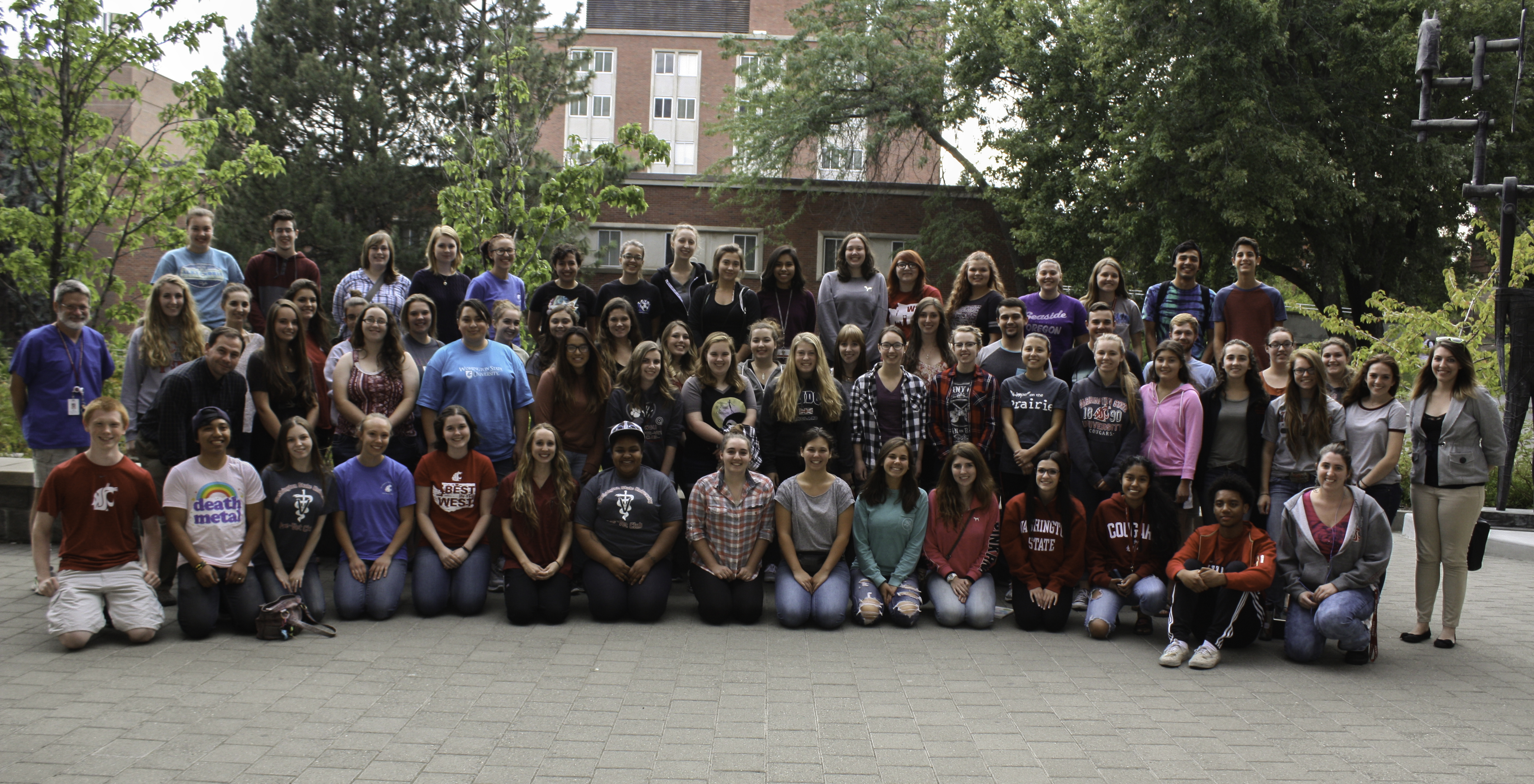
Our club offers an academic and social support system for pre-professional students in veterinary medicine. It promotes scholarship, fellowship, leadership and character among its members through meetings, pertinent trips and activities. Our main goal is to educate members on careers in veterinary medicine and provide information regarding entrance requirements to the various veterinary colleges.
Contact Information
Club Advisor: Tina Krauss, tina.krauss@wsu.edu
Email: wsupvc@gmail.com
Social Media:
- Instagram: WSUPreVetClub